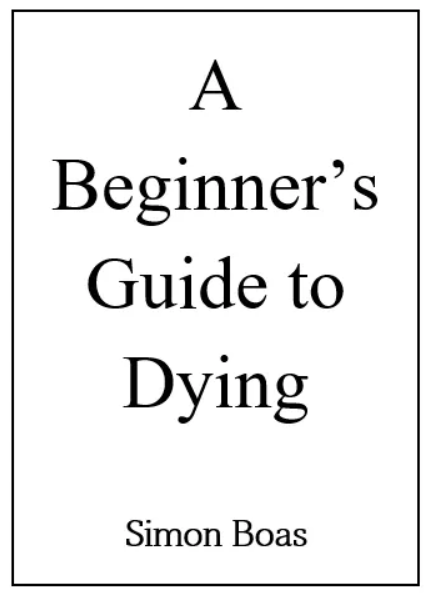
Story behind the Book Choice
So many stories have happened since I wrote my last book reflection. Somehow, I feel, I have lost myself again in the meantime — at least a thousand times. But that was good and helpful. “Don’t take up things again that you put down already.” This is one lesson I learned at the vision fast at the beginning of the year. And it is true. It is just that I truly never put writing down. And I did not put reading down either. What I had to do is pause with everything I used to do in order to find back to the things that belong to me. And the books are part of me. They will not leave me ever — no matter how much time I spend without them because my mind is busy with itself.
That is fine.
It has to be.
No self-blame.
The book choice is also related to the vision fast. I think, I saw it on the website of the School of Lost Borders. Or the Amazon algorithm showed it to me. I do not remember. But the book found its way to me. Somehow it also showed me the way back to reading. Last night, I watched a Super Soul Sunday episode with Oprah Winfrey and Richard Rohr. Actually, googling Rohr content led me to the episode. And what I realized, despite the many wonderful things Rohr said there, was that reading has always been my spiritual practice no. 1 even before I became consciously spiritual — if that makes any sense.
As a matter of fact — the feeling that I have when my fingers push the buttons on the keyboard and the sound it makes when they dance; nothing compares to that, not even meditation. Oh, well, I guess, one should not compare the two. What I am saying is that reading is so much more than I ever thought it was, even though it has always meant the world to me. That makes even less sense but I do mean it that way.
It has been funny these past months and weeks. I have gotten to know some new people — during the quest, at work, in life. And somehow these people do associate brain and books with me. That is not because I talk about these things all the time. I mean, I do not talk about my brain that often but I guess, since I carry it with me all the time, people can’t ignore it in a way. The same is true for books. I do not consciously walk around with books all the time. But I guess, my first response to many questions is: “Have you read that book about…?”
Well, that is a long intro to the book by Boas. And there is not going to be more now. That book is a gift, just like life is a gift, no matter who you think is responsible for this gift. And this gratitude about being alive in the first place is the overarching feeling Boas shares in his foreword. “My overwhelming feeling is of gratitude, of how insanely luck it was to have lived in the first place” (5). This is so true, even though we hardly ever think of life that way and we might not expect it from a man in his 40s who have been diagnosed with terminal cancer recently.
That is what death can teach you.
- Prioritise

This passage resonated so much with me because I wrote a similar line last year when I decided to share my own story with the world. I used different words but basically what I said was that knowing that you will die soon makes everything else unimportant. And that is completely liberating. And I think, priorities in life are liberating in any case. It does not have to be death knocking at your door that teaches you this. But illness and death are the most powerful teachers, for sure. That sounds contradictory, I know. Still, even last year, when my own life rotated mostly about caring for my mother going through cancer, I remember this time being one of the clearest phases of my life again. There was work and there was cancer. And there was the death of my dog. That was enough. Most other things became unimportant. And caring for myself took the space that was left.
That is totally enough.
You realize how much love you have to share.
If you stop worrying about other things.
2. Canvas

I just love that image of the canvas. I have never seen that analogy before. Most people might think of life as the canvas. But death in the way that Boas talks about it here is even more “helpful” because it does give meaning to everything you find painted on the canvas. And in fact, dealing with death and thinking about it might not have been the most pleasant thing I have ever done. But surely it has been the most meaningful thing.
Boas’ story is also very much related to his international aid work in countries of war and disaster. And especially this resonated a lot with me when reading it. Without my stays abroad in crises countries, I would not be the same person; exactly because you encounter death on a daily basis there — extreme poverty, illness, destruction, trauma, and violence. All these things prevent you from not thinking about death. Of course, this is traumatizing in way and I am not writing this to make it sound like the most heroic thing ever. Neither does Boas.
He always makes sure that his words do not appear arrogant. But experiencing these things abroad is an absolute privilege that changes your life in a way that cannot be reversed. And I do share that and I am grateful for it, even though I have been struggling to integrate all these experiences because my brain tended to downplay the traumatic effects they can have — especially since you know, as a “Western” visitor, that you are just observing and standing in the periphery of pain and disaster.
3. Faith

Boas talks about faith as well. As he mentions in this passage, he no longer considers himself an atheist. That is true for me too. My spiritual journey has been winding as of now. And I have a feeling that I feel more comfortable now, knowing that I do not believe in whatever people who call themselves believers tell you to believe in — if you can follow… Boas calls for a universal faith here that puts love and unity at the center. That is all there is if you ask me. That is the point of it all. I know that theologians and self-acclaimed scholars of all denominations would somehow agree to this and then give a long lecture of what they mean by that. I am so happy I am not one of them anymore. And I am so happy that my own life experience has brought me to take up books like this one. It is so healing to know that life is so precious and that you should spend every minute of it doing the things you love and bringing love to others by doing them.
That is what death teaches you.
Reflection Questions
1) Did you ever experience a moment in your life when your priorities completely shifted? If not, are there any things in our present life that you are not prioritizing sufficiently? Why?
2) Do you agree that death is a canvas that makes life meaningful?
3) How do you think about faith and the different religions? Would you say you are spiritual and/or religious?
Schreibe einen Kommentar